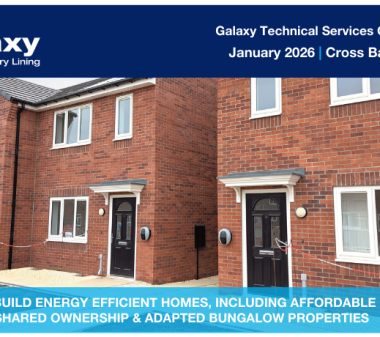


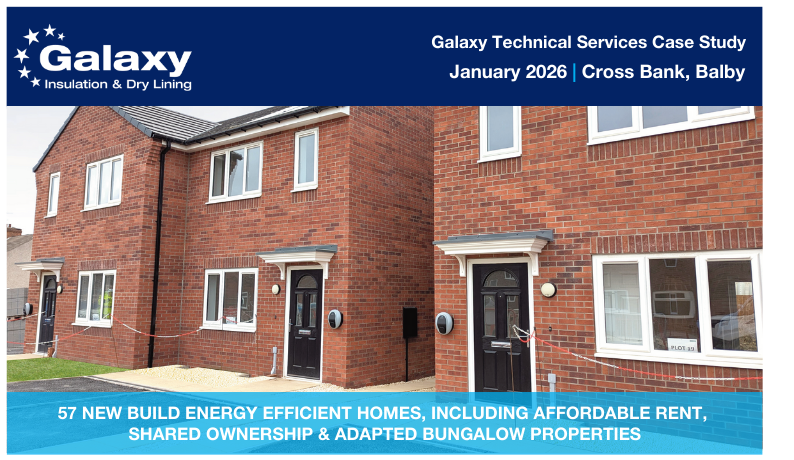
A new development in South Yorkshire has created 57 new homes with minimal energy demand throughout their lifetime, whilst also complying with the latest Building Regulations associated with the prevention of overheating and ventilation.
The goal for the Cross Bank development by Wordsworth Properties for social housing provider Together Housing was to create homes which are not only affordable for the wider community, but also highly sustainable and healthy for occupiers.
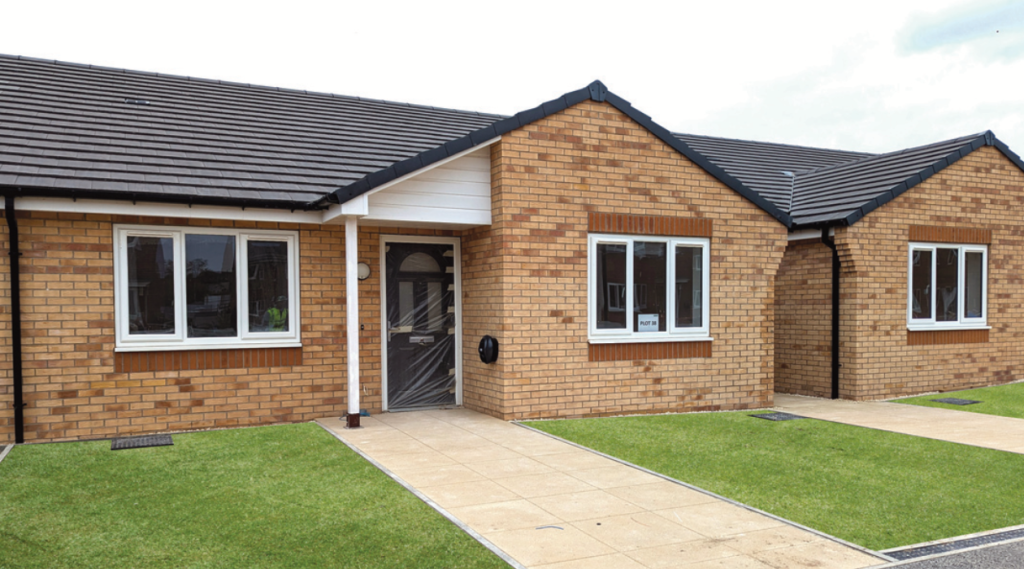
The scheme has transformed a redundant site adjacent to an established residential area in Balby, Doncaster with the creation of a variety of dwellings ranging from one to four bedrooms. These comprise of a mix of affordable rent and shared ownership terraced and semi-detached homes, along with adapted bungalows for those with reduced mobility, providing much- needed 100% affordable housing.
Funded through the government’s Homes England ‘Affordable Homes Programme’, the development also aligns with Together Housing’s Net Zero commitments meaning that each home is fitted with technologies that minimise fossil fuel generated energy when occupied, including solar panels, EV charging points and air source heat pumps (ASHPs).
It also helps Doncaster Council to meet its commitment to enhancing housing options for older residents, families and individuals with physical disabilities, with affordability and energy efficiency at the core to provide comfortable living while also prioritising sustainability.
As the bar is raised on the levels of thermal insulation and air-tightness required to deliver the most energy efficient homes, the potential for summertime overheating and a host of issues resulting from insufficient ventilation also increases. For architects and developers in England & Wales, it is increasingly becoming a challenge to comply with the three Approved Documents within the Building Regulations concerned with these areas – Part F relating to ventilation, Part L for thermal performance and Part O, a more recently introduced document which addresses overheating.
The minimum standards demanded by these Approved Documents can seem at odds with each other. For example, creating a highly insulated envelope that keeps a home warm in winter can also result in internal spaces becoming too warm during sunnier and warmer months. In addition, making a property extremely airtight to eliminate draughts without proper consideration for ventilation can lead to poor indoor air quality, resulting in issues which are a danger to human health such as mould growth on walls and ceilings.
Hence why it can be a tricky balance to develop the correct specification for all elements of the building envelope when creating new homes which must be thermally superior, particularly to be compatible with the type of heating provided by ASHPs, without compromising the need to be comfortable all year round and healthy for occupiers.
Parts L (energy), O (overheating) and F (ventilation) of the Building Regulations must also be considered holistically with all the other Approved Documents, especially Part B (fire safety) and Part E (acoustics). The minimum standards stipulated in these documents also influence the design and specification of the building envelope and party walls.

The Cross Bank development was by no means unique in facing this Building Regulations paradox. However, the goals set by the developer would require some detailed insights to ensure the forward-thinking objectives could be achieved without extending product lead times and staying within the available budget, and it was here that GTS were able to assist.
The GTS team is ideally placed to provide complete construction solutions for building projects of this kind, offering Building Regulations-compliant, cost-considered and impartial technical guidance. This includes expertise to develop specifications according to the preferred build methods through its access to an extensive range of products available through Galaxy’s nationwide branch network.
The team provided technical advice and calculations in four intrinsically linked areas to ensure a SAP rating of A or B would be achieved at Cross Bank.
The first of these was the selection of the appropriate block and cavity insulation for the external wall. What was absolutely crucial here was identifying products which would achieve the target U-value whilst being within budget and available in short lead times to keep the build schedule on track.
A second area in which GTS assisted was in relation to compliance with the requirements of Part O to minimise the risk of overheating, with the other two key areas associated with the renewable energy technologies deployed in the homes.
This included assessing the impact of changing the heating source from gas boilers to ASHPs, which resulted in complete SAP revisions to all plots, and advising on the correct quantity of solar photovoltaic (PV) panels per house type. The latter helped to determine the optimum solar PV panel quantities per plot, which was a crucial factor for the customer from both a budget and compliance perspective, with GTS developing a full specification and schedule.
All these challenges were overcome by GTS through close collaboration with the customer and within a restricted timeframe.
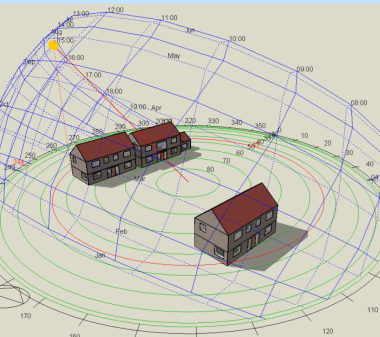
One of the most important aspects of the support provided by GTS was the provision of TM59 overheating calculations, which were essential to demonstrate how to achieve compliance with Part O (overheating) regulations. The team conducted these calculations following the initial SAP specification being agreed, which flagged up potential issues on several plots at an early stage so they could be effectively addressed.
The calculations revealed that the solar transmission (g-value) of the glazing in some plots heightened the overheating potential, which could be mitigated in one of two ways – by introducing a mechanical ventilation system in the properties or changing the glazing specification to reduce solar gain. Wordsworth Properties chose the latter and was able to work with their window fabricator to ensure the correct glazing specification was applied to the affected plots and windows.
The external wall U-value calculations completed by GTS provided the developer with options for using different insulation solutions, blocks and internal finishes. This offered the customer a choice of solutions according to their preference. These calculations were combined with the utilisation of an existing thermal bridge scheme, Recognised Construction Details, to align with GTS’s proposed construction specification, and assist with meeting the fabric energy efficiency targets.
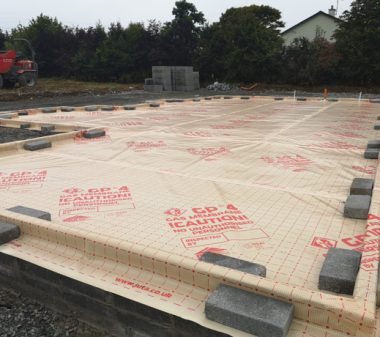
The developer had indicated in early discussions that their preferred building method for the homes was to use an insulated beam and block floor system, and this was incorporated into the recommendations provided by GTS, along with obtaining and applying the associated Psi-values.
Throughout the process, the GTS team was in regular contact with the customer to discuss the different fabric and renewable options available to them from a compliance and cost perspective. This allowed the project team to make informed decisions prior to commencing site works.
GTS was also able to help the client maintain consistency of quality throughout the project by providing the client with access to the GTS App to capture, upload, and manage photographic evidence throughout construction. The app is a key tool for ensuring compliance by providing clear guidelines, real-time approvals, and an automated PDF compliance report for Building Control sign-off – saving time, reducing errors, and streamlining project management.
The range of technical services provided by GTS is set to play a more significant role in new build housing projects in future as developers seek to achieve ever higher performance standards. And when the Cross Bank project is completed in late 2025, it will serve as an excellent example of how ambitious goals can be realistically achieved through a joined-up approach.
Jonathan Bailey, Managing Director of Wordsworth Properties:
“Creating highly sustainable, appealing new homes that are fit for the future requires a thorough understanding of how to comply with multiple parts of the Building Regulations, and that’s why we value the services provided by the Galaxy Technical Services team so highly. Their input into the Cross Bank scheme at an early stage enabled us to make informed decisions and deliver the best levels of performance possible within the budget available, and avoid potentially costly issues which could result from non-compliance.”Speaking earlier in 2025, Dai Howells, Assistant Director of Development at Together Housing:
“We’re passionate about developing communities for future generations and to have three housing types available and homes for shared ownership widens the market for more people. It’s been great working with Wordsworth Properties to deliver energy efficient homes that meet high quality standards and we’re eager to share the completed development with the local community in the coming year.”
Read further information on the complete range of services provided by Galaxy Technical Services.